
Our History and Future
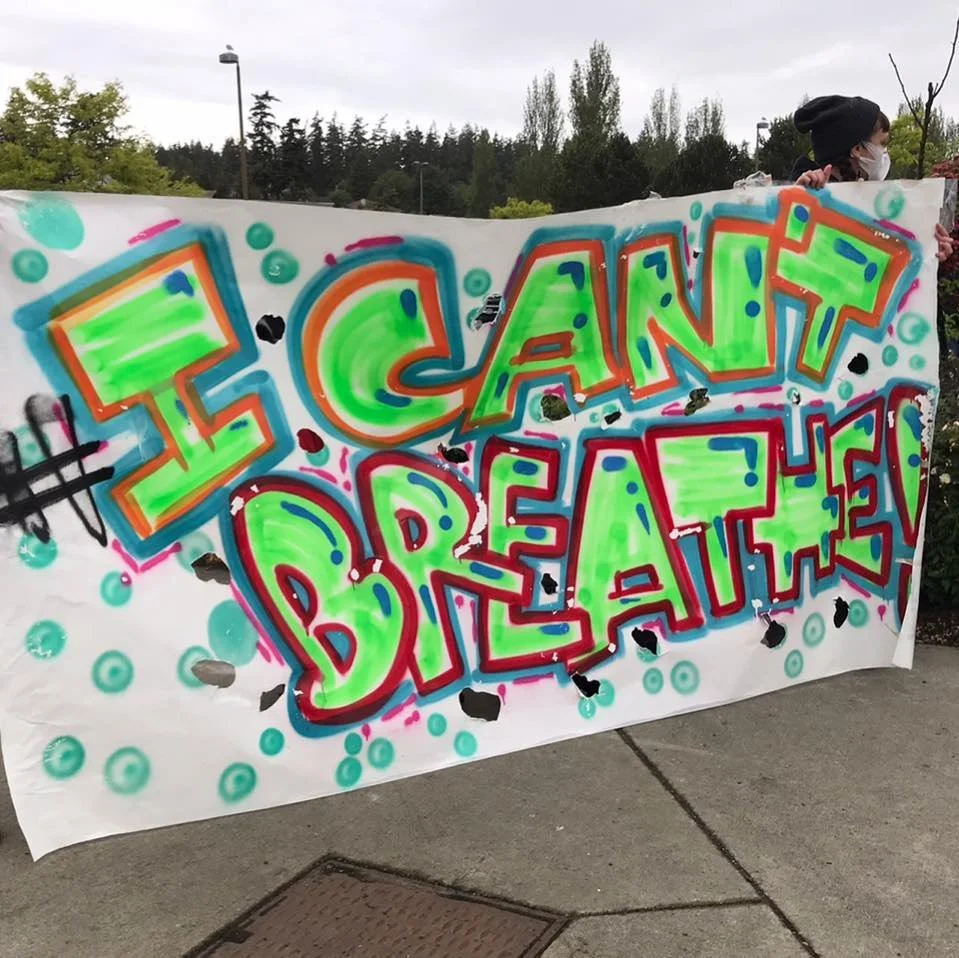
Black Lives Matter of Jefferson County is a collectively run 501(c)3 organization which seeks to eradicate white supremacy, and ableist hetero-patriarchy. BLMJC formed in 2020 in the aftermath of continued police brutality towards Black people in the United States and a recognition that white supremacist doctrine also manifests in a myriad of other institutions and systems which prevent economic, social, and political liberation for BIPOC. Our initial conception began with direct action events, including a Juneteenth event with an attendance of 1500. Since then we worked to create a Non-hierarchical model for Non-profit boards and became a Community Organizer led Nonprofit Organization. We have used our 501(c) status to fundraise on behalf of and to incubate local BIPOC/PGM led projects and community organizing groups.
We are now entering a new stage in our evolution as and organization, we are in process of hiring a new Executive Director to focus their energy on supporting the unique needs of the Black Community in Jefferson County. We will continue to support the greater BIPOC/PGM Community through a partnership with “Well Organized”.
Our Values
We believe in an inclusive movement and in the intrinsic value of all Black Lives including; Women and all Genders on the Gender Spectrum, Queer Lives, Trans Lives, Sex Workers Lives, Undocumented Lives, Those with Criminal Records, and those with Disabilities.
We Stand in Solidarity with All BIPOC who face White Supremacy.
We aim to amplify Black Voices, especially those where the intersection of oppression and vulnerability is the greatest.
We Reject Hierarchical, Judicial, and Violent Systems which perpetuate White Supremacy.
We are Committed to building safe communities and equitable lives for BIPOC in Jefferson County and to work with and support Groups already existing in the community doing this work.
“I will not ask you to do something that I am not willing to do myself.”

-
We demand that our Community hold each other accountable for the ways in which they uphold White Supremacy, from hiring practices, discrimination in schools, to those who are directly explicitly racist or anti-black. We call for our Community to support us in our efforts for not only Equity, Justice and Safety but for lives filled with Joy and Prosperity. We demand not just accountability of officers after a murder, but entire police departments. State agencies like police, immigration agents, local officials, institutions who cause harm to Black communities must acknowledge the harm they inflict upon Black families and must make official apologies and commit resources to families and communities who have long suffered their actions.
-
This includes; Affordable Housing, Healthcare, Mental Healthcare, Education, Jobs, Community Safety and Community Based Restorative Justice programs, etc.
-
At this moment of economic crisis we need to seize the opportunity to rethink the economy and move it towards one that serves the needs of people and the planet, not corporations and the wealthy. Create community programs to help BIPOC owned businesses and to help them start new businesses. Create Legislation to insure Salary Equality and fair and transparent hiring practices.
-
This means; Suspend use of paid administrative leave for Cops under investigation, Withhold Pensions and Do not rehire Cops involved in Excessive Force, Require Cops to be liable for misconduct settlements, Cap overtime accrual and overtime pay for military training (of Police), Withdraw participation in Police militarization programs, Disarm Police, Remove Police from Schools, Reduce size of Police Force.
-
We demand the Protection of our First Amendment rights to Freedom of Speech and the Right to Assemble and Petition the Government regarding grievances. We demand that State and Local Agencies prevent any violence or harm to come to protesters and that there is no abuse of power or lethal force used against them. We also assert that violations of property never be equated to violations of human life. We demand that vigilantes who would mean to do harm to protesters are held accountable by the state as well. We demand that no protesters be kidnapped by the state or face any charges.
“...there is more to Blackness than our struggle. ”

Action, Advisory & Advocacy
Sponsorship Program
“Our goal is to increase folx capacity without extracting their time, resources, or energy."
“We aim to foster a more radical approach to community organizing that emphasizes relationships and collective liberation.”
The Action, Advocacy, & Advisory sponsorship program (AAA Program) is a pilot initiative aimed at identifying three PGM (People of the Global Majority) with intersectional marginalized identities (LGBTQIA+, gender non-conforming, previously incarcerated individuals, undocumented, folx with disabilities, etc.) who have demonstrated a commitment to creating meaningful change. As a social and racial justice non-profit, we recognize the pervasive influence of the non-profit industrial complex, which often perpetuates power dynamics that replicate oppressive systems.
Despite our best intentions, we acknowledge the potential for our organization to inadvertently reinforce these dynamics. It is essential for us to proactively address this reality and strategically organize to build power in our community without perpetuating gatekeeping or paternalistic attitudes. In response to the limitations of the non-profit industrial complex, many have turned to mutual aid as a more direct means of addressing community needs. While mutual aid can be effective, it also presents challenges, including the risk of co-optation by establishment forces, removal of responsibility from policy-makers, and the potential for burnout among participants.
To navigate these complexities we propose the Action, Advocacy, & Advisory sponsorship program (AAA). This is a pilot initiative aimed at identifying three PGM (People of the Global Majority) with intersectional marginalized identities (LGBTQIA+, gender non-conforming, previously incarcerated individuals, undocumented folx, folx with disabilities, etc.) who have demonstrated a commitment to creating meaningful change.
These are sponsorships with no strings attached. We recognize the inherent transactional nature of this dynamic within our capitalist society, but we aim to minimize its impact by prioritizing autonomy and community empowerment. Our goal is to increase folx capacity without extracting their time, resources, or energy. We aim to foster a more radical approach to community organizing that emphasizes relationships and collective liberation.
AAA Program Recipients
-
Shongi Motsi
Hello community! Since becoming a recipient of BLMJC’s AAA program, I've been dedicated to enhancing our local experience and supporting black-owned businesses. I established a booth at the Port Townsend Farmers Market, aiming to diversify offerings and promote shopping local. Through this venture, I've fostered connections, collaborations, and new opportunities for engagement with our community networks. My passion for community development and ancestral healing guides my work, inspiring me to seek out meaningful projects. When I'm not immersed in community efforts, you might catch me belting out karaoke tunes, tending to flowers with gratitude, or crafting natural potions. Feel free to say "howdy, hello, or how are ya" whenever our paths cross. Let's stay connected and support each other. Be well!
-
Peter Mustin
Peter’s journey of healing is grounded in connection to the land. Peter’s work at Woodbridge Farm isn't just about growing crops and raising livestock; it's about creating a community of inclusivity and reconnecting with the land. As one of rural Jefferson County's few Black farmers and largest Black landowner, Mustin is committed to creating a space where people of all backgrounds can come together, to learn, and reconnect with the land.
Central to Mustin's vision is environmental stewardship. Sustainable farming practices, organic cultivation, and conservation efforts are woven into the fabric of Woodbridge Farm. Through his life experience, Mustin seeks to inspire others to embrace a more sustainable way of life.
-
Naiome Krienke
Naomi Krienke, founder of the Tamanowas Foundation and the Longhouse for the People project, is a beacon of hope on the Olympic Peninsula. Her two-decade effort focuses on Indigenous-led revitalization, land stewardship, spiritual education, and foodways revival. The Longhouse project heals colonization wounds, promotes cultural resurgence, and restores Indigenous food systems through planting native species like kwala, chocolate lilies, and nettles. Workshops and events foster community connections and shared knowledge.




Newsletter
Sign up for volunteer opportunities and monthly updates.